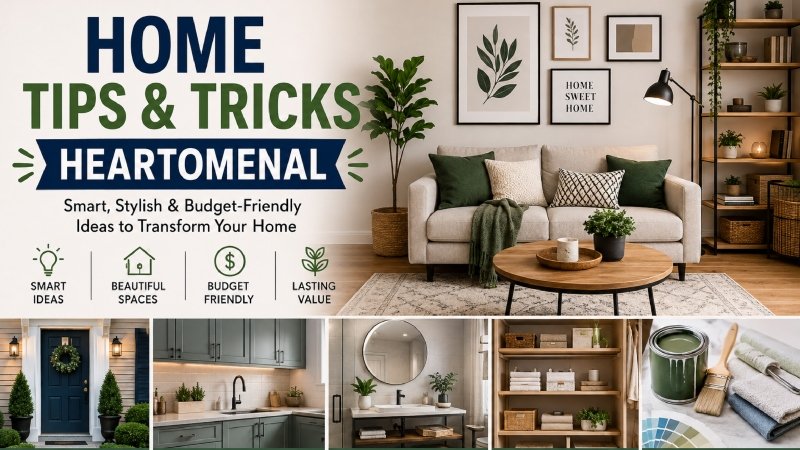
A better home does not always require a major renovation or an expensive contractor. In many cases, the biggest improvements come from smarter planning, better organization, thoughtful design choices, and small upgrades that solve everyday problems. The right home tips and tricks heartomenal approach focuses on making your space more functional, comfortable, attractive, and easier to maintain.
Whether you own a large house, rent an apartment, or live in a compact space, improvement starts with understanding what your home actually needs. Instead of following every trend, focus on changes that support your lifestyle and deliver lasting value. This guide explains practical strategies for upgrading your home without creating unnecessary expense, clutter, or renovation stress.
Start With a Clear Home Improvement Plan
One of the most common home improvement mistakes is starting before deciding what the project needs to accomplish. Before buying paint, furniture, flooring, or decorative accessories, identify the problem you want to solve. A dark room may need better lighting rather than new furniture. A cluttered kitchen may need better storage instead of a complete remodel. A dated bathroom might look significantly better after replacing fixtures, mirrors, and lighting.
Write down your priorities and divide them into three categories: essential repairs, functional improvements, and cosmetic upgrades. Essential repairs should always come first. Problems involving water leaks, electrical systems, structural damage, unsafe flooring, or deteriorating materials should not be covered up with decoration. After that, concentrate on improvements that make daily life easier. Cosmetic changes can come later.
Build a Realistic Budget
- A good budget should include more than the advertised price of materials.
- Consider labor, tools, delivery charges, permits when applicable, disposal costs, and unexpected repairs. Setting aside an emergency reserve can prevent a small surprise from stopping an entire project.
- A useful rule is to avoid spending your entire available budget on the original estimate. Homes often reveal hidden problems once walls, floors, cabinets, or fixtures are opened.
- The goal is not simply to spend less. It is to spend intelligently.
Focus on High-Impact, Low-Cost Improvements
Some upgrades can dramatically change a room without requiring a major renovation.
Refresh the Walls
Paint remains one of the most effective ways to change a home’s appearance. Light neutral shades can make smaller rooms feel more open, while carefully selected accent colors can add personality. Do not choose a color simply because it is currently popular. Consider natural light, existing flooring, furniture, and the purpose of the room.
Prepare the walls properly before painting. Fill small holes, clean dusty surfaces, repair cracks, and use the appropriate primer when necessary. Good preparation often produces a bigger visual improvement than buying expensive paint.
Upgrade Hardware and Fixtures
Cabinet handles, drawer pulls, faucets, light fixtures, and door hardware are small details with surprisingly large visual impact. Replacing mismatched or outdated hardware can make a kitchen or bathroom appear more modern without changing the cabinets or countertops. Choose finishes that work together instead of mixing too many unrelated styles. Consistency creates a more deliberate and professionally designed appearance.
Improve Lighting
Lighting affects how a room looks and how people use it. A strong lighting plan usually combines general illumination with task and accent lighting. Kitchens benefit from focused lighting over work surfaces. Living rooms can become more flexible with layered lighting and dimming options. Bedrooms often work best with softer sources positioned for reading and relaxation. Before replacing every fixture, examine where shadows and dark areas occur. Sometimes moving a lamp or adding one well-placed light solves the problem.
Make Your Home More Functional Through Better Organization
Beautiful rooms become frustrating when everything is difficult to find. Effective organization begins by reducing unnecessary possessions. Keeping items that you rarely use consumes valuable storage space and makes everyday cleaning harder. Once unnecessary items are removed, organize what remains according to frequency of use.
Frequently used kitchen equipment should remain accessible. Seasonal items can occupy higher shelves or less convenient storage. Entryways should have designated places for shoes, keys, bags, and coats.
Use Vertical Space
Walls are often overlooked as storage opportunities. Floating shelves, wall-mounted organizers, tall cabinets, pegboards, and vertical storage systems can increase capacity without consuming much floor space. However, avoid filling every available wall. Open space is part of good design. Storage should make a room easier to use, not visually heavier.
Choose Multi-Purpose Furniture
Furniture that performs more than one function is particularly useful in smaller homes. An ottoman with hidden storage can hold blankets. A bed with drawers can replace a separate storage unit. A foldable dining table can create additional workspace when needed.
The best home tips and tricks heartomenal ideas are not necessarily the most expensive. They are the ones that make limited space work harder.
Give Your Kitchen a Strategic Refresh
- A kitchen renovation can become expensive quickly, so start by identifying what genuinely needs replacement.
- If the cabinet structure is still strong, replacing everything may be unnecessary. New hardware, updated lighting, a backsplash, faucet, or carefully selected paint can change the appearance while preserving usable components.
- Countertops deserve careful consideration because they receive constant wear. Choose materials based on durability, maintenance requirements, appearance, and budget rather than appearance alone.
- Storage also matters. Drawer organizers, pull-out shelves, vertical dividers, and pantry systems can improve functionality without changing the room’s footprint.
- A successful kitchen is not simply attractive. It should make cooking, cleaning, and storing supplies easier.
Make Bathrooms Feel Cleaner and More Comfortable
Bathrooms benefit greatly from improvements that combine appearance with function. Start with worn caulking, damaged grout, leaking fixtures, poor lighting, or inadequate ventilation. These issues deserve attention before decorative upgrades. A modern mirror, improved lighting, updated faucet, fresh hardware, and coordinated accessories can create a significant visual difference. Storage should also be intentional. Wall-mounted cabinets and narrow shelving can provide capacity where floor space is limited. If moisture remains trapped after showers, improve ventilation. Persistent humidity can contribute to unpleasant odors and material deterioration.
Improve Curb Appeal Without Overspending
Your home’s exterior establishes the first impression, but curb appeal does not require an expensive landscaping project. Begin with basic maintenance. Clean the entryway, remove debris, trim overgrown plants, clean visible exterior surfaces, and repair obvious damage.
The front door deserves particular attention because it naturally becomes a visual focal point. A suitable paint color, clean hardware, updated house numbers, and attractive lighting can make the entrance feel significantly more welcoming.
Plants should complement the climate and maintenance capacity of the household. Choosing varieties suited to local conditions is usually more practical than selecting plants solely for appearance. Outdoor lighting can also improve both appearance and nighttime visibility around walkways and entrances.
Choose Improvements That Support Long-Term Value
Not every attractive upgrade adds meaningful value to a home tips and tricks heartomenal. When comparing projects, consider durability, maintenance, energy efficiency, functionality, and broad appeal. For example, repairing a water problem is generally more important than installing decorative features. Improving insulation, sealing drafts, maintaining heating and cooling equipment, and replacing inefficient fixtures may produce benefits long after the initial project is forgotten.
Know When DIY Stops Making Sense
DIY projects can save money and provide valuable experience, but confidence should not replace expertise. Painting, basic decorating, furniture assembly, simple organization projects, and certain minor repairs may be suitable for capable homeowners. Electrical work, significant plumbing modifications, structural changes, gas-related work, roofing problems, and other high-risk projects may require qualified professionals.
A professional is not simply an added expense. In complicated projects, expertise can prevent unsafe work, code violations, material damage, and expensive corrections. When in doubt, determine the risk before deciding whether the savings are worth the responsibility.
Common Home Improvement Mistakes to Avoid
The first mistake is trying to renovate everything simultaneously. Multiple unfinished projects create stress, increase costs, and make it difficult to measure results. The second is choosing appearance over function. A beautiful room that is uncomfortable or impractical will eventually become frustrating.
Another common mistake is buying materials before measuring accurately. Incorrect measurements can lead to wasted materials, installation problems, and additional costs. Ignoring maintenance is another expensive error. New features still require cleaning, inspection, and occasional repairs.
A Practical Home Improvement Priority List
If you are unsure where to begin, use this order:
| Priority | Focus | Main Benefit |
|---|---|---|
| 1 | Safety and repairs | Prevents damage and risk |
| 2 | Organization | Improves everyday function |
| 3 | Lighting | Enhances comfort and appearance |
| 4 | Paint and surfaces | Creates visible transformation |
| 5 | Fixtures and hardware | Modernizes the space |
| 6 | Decorative details | Adds personality |
This approach prevents cosmetic projects from distracting you from important repairs.
Advantages and Limitations of Smart Home Upgrades
Advantages
- Better use of available space
- Greater comfort in everyday routines
- Improved appearance without full renovation
- More organized and manageable rooms
- Potential improvement in long-term property appeal
- Greater control over renovation spending
Limitations
- Even small projects require planning
- Older home tips and tricks heartomenal may contain hidden repair costs
- Some work requires professional expertise
- DIY projects can take longer than expected
- Trends can become outdated quickly
Frequently Asked Questions
What is the best place to start when improving a home?
Start with safety and functional problems. Repair leaks, electrical concerns, structural issues, damaged surfaces, and other urgent problems before spending money on decoration.
How can I improve my home with a small budget?
Focus on paint, lighting, hardware, organization, cleaning, and small fixture upgrades. These changes can produce noticeable results without requiring a complete renovation.
Should I renovate one room at a time?
Usually, yes. Completing one area before beginning another makes budgeting, organization, and progress easier to manage.
Are expensive materials always better?
Not necessarily. The best material depends on durability, maintenance, appearance, installation requirements, and how the space will be used.
When should I hire a professional?
Hire qualified professionals when a project involves significant electrical, plumbing, structural, gas, roofing, or other safety-sensitive work beyond your knowledge and experience.
Final Thoughts
Creating a better home is less about following every design trend and more about making deliberate decisions. The most effective home tips and tricks heartomenal approach starts with priorities. Repair what is broken, improve what causes daily frustration, organize what creates clutter, and then add decorative details that reflect your personality.
You do not need to transform the entire property in one weekend. Choose one meaningful project, establish a realistic budget, understand the work involved, and complete it properly before moving to the next. A successful home improvement project should leave you with more than a prettier room. It should make your home safer, easier to maintain, more comfortable, and better suited to the way you actually live. Start with the problem that matters most. Make one smart improvement. Then build from there.